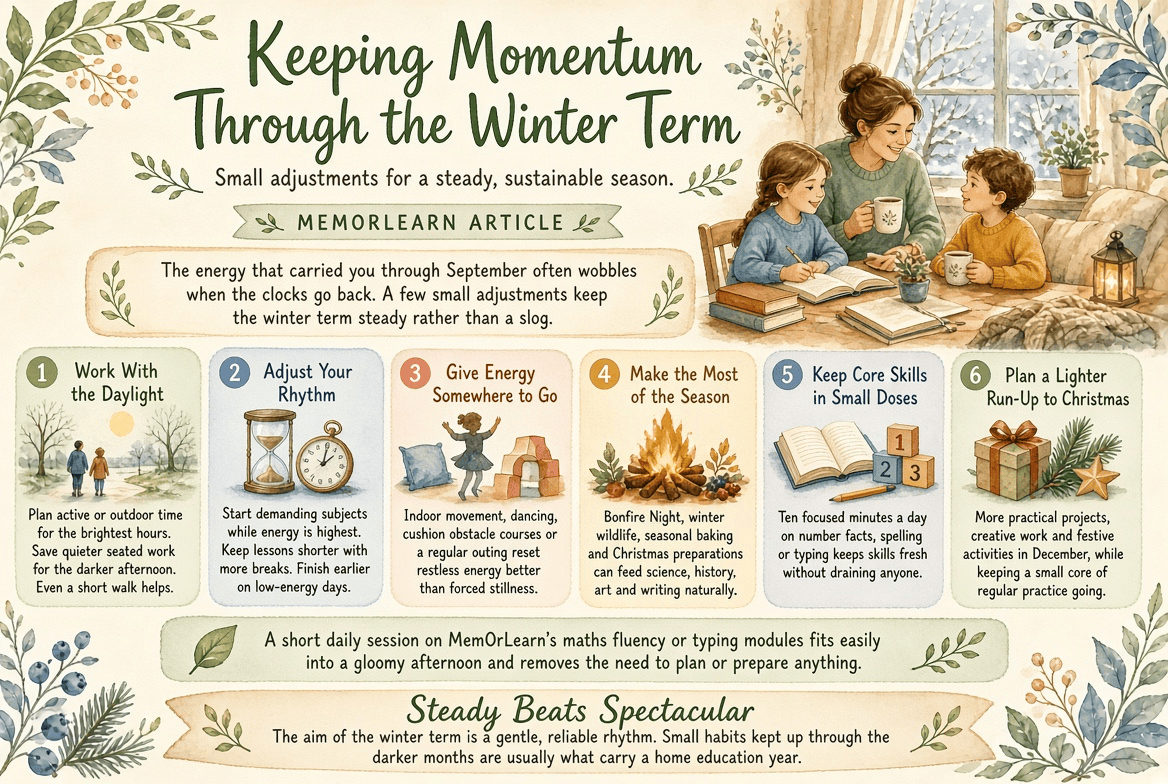
Most home educating families notice a shift around the time the clocks go back. The mornings are gloomy, the afternoons are dark by teatime, everyone is a bit more tired, and the energy that carried you through September starts to wobble. That's entirely normal, and a few small adjustments can keep the winter term feeling steady rather than a slog.
Work With the Daylight
Daylight is in short supply until spring, so it's worth using it well. Where you can, plan the most active or outdoor activities for the brightest part of the day, and save quieter, seated work for the darker late afternoon. Even a twenty-minute walk or a run around the garden before lessons can make a real difference to concentration and mood. Wellies, waterproofs and a flask of something warm turn "it's too grim to go out" into part of the day.
Adjust Your Rhythm
A timetable that suited long summer mornings may not suit November. Many families find it helps to:
- Start with the most demanding subject while everyone is freshest
- Keep lessons shorter, with more breaks, when energy is low
- Save reading aloud, audiobooks and craft for the cosy end of the afternoon
- Finish earlier on days when everyone is flagging
This isn't lowering standards. It's recognising that people work best at different times of year.
Give Energy Somewhere to Go
On days when the weather really does win, children still need to move. A few minutes of dancing to a favourite song, an obstacle course made from cushions, or a quick game of indoor hide and seek between lessons can reset restless energy far better than telling everyone to sit still. A regular swimming session, a visit to the library or a trip to the local soft play can also give the week a bit of shape and a change of scene.
Make the Most of the Season
Winter offers plenty that summer doesn't. Bonfire Night, changing weather, shorter days, seasonal baking, winter wildlife and the run-up to Christmas can all feed topic work in science, history, art and writing without a separate plan. A project that follows the season, such as a weather diary, bird feeding records or making cards and decorations, often holds interest better than one imposed from outside.
Keep Core Skills Ticking Over in Small Doses
When energy dips, the daily habits are often the first to slip: number facts, spelling and typing practice. Rather than dropping them or forcing long sessions, shrink them. Ten focused minutes a day keeps skills fresh without draining anyone. A structured tool can help, because it removes the planning. A short daily session on MemOrLearn's maths fluency or typing modules, for example, is easy to fit into a gloomy afternoon without you needing to prepare anything.
Plan a Lighter Run-Up to Christmas
December rarely goes to plan. Concerts, visits, baking and excitement all make long lessons hard to sustain. Rather than fighting it, many families deliberately plan a lighter final few weeks, with more practical projects, creative work, reading together and festive activities, while keeping a small core of regular practice going. That way the Christmas holidays feel earned instead of the term fizzling out in frustration.
Check In at Half-Term
Half-term is a natural pause to look back over the term so far. Which routines are holding? Which have quietly been dropped? Is anything proving too hard, or too easy? It doesn't need a formal review, just a cup of tea and a few notes. If you use a platform that records progress, such as MemOrLearn, a quick look at how each child's practice has gone since September can show where things have been steady and where they've slipped, so you can adjust before the spring term rather than after it.
Steady Beats Spectacular
The aim of the winter term isn't to be the most productive stretch of the year. It's to keep a gentle, reliable rhythm going so that when the lighter mornings return, you're building on something solid rather than starting again. Small habits, kept up through the darker months, are usually what carry a home education year.